

Income: Designed with intent and precision
Income is no longer just sourced—it’s engineered. Today’s portfolios combine exposures across asset classes to target income, manage risk, and meet evolving cash flow needs.
Fixed income: From allocations to outcomes
Fixed income has evolved from a traditional source of yield into an important tool for building targeted portfolio outcomes.
The future of fixed income details how:
Fixed income now plays a broader strategic role offering access to potential alpha, complex exposures, and a wider range of portfolio applications.
Advances in trading, data, and ETFs have improved liquidity and access enabling more precise and efficient portfolio construction.
Portfolio design is increasingly driven by income, risk, and cash flow objectives not static asset allocations.
From yield to solutions
As traditional sources of portfolio income become less consistent, investors are revisiting the 60/40 framework. The strategies below can help balance income, risk, and liquidity across market environments to support deliberate, outcome oriented portfolio designs.
A portfolio-wide approach to generating income
Contractual income, total return, and alternative sources of return and risk can meet specific objectives more effectively than relying on a single lever.
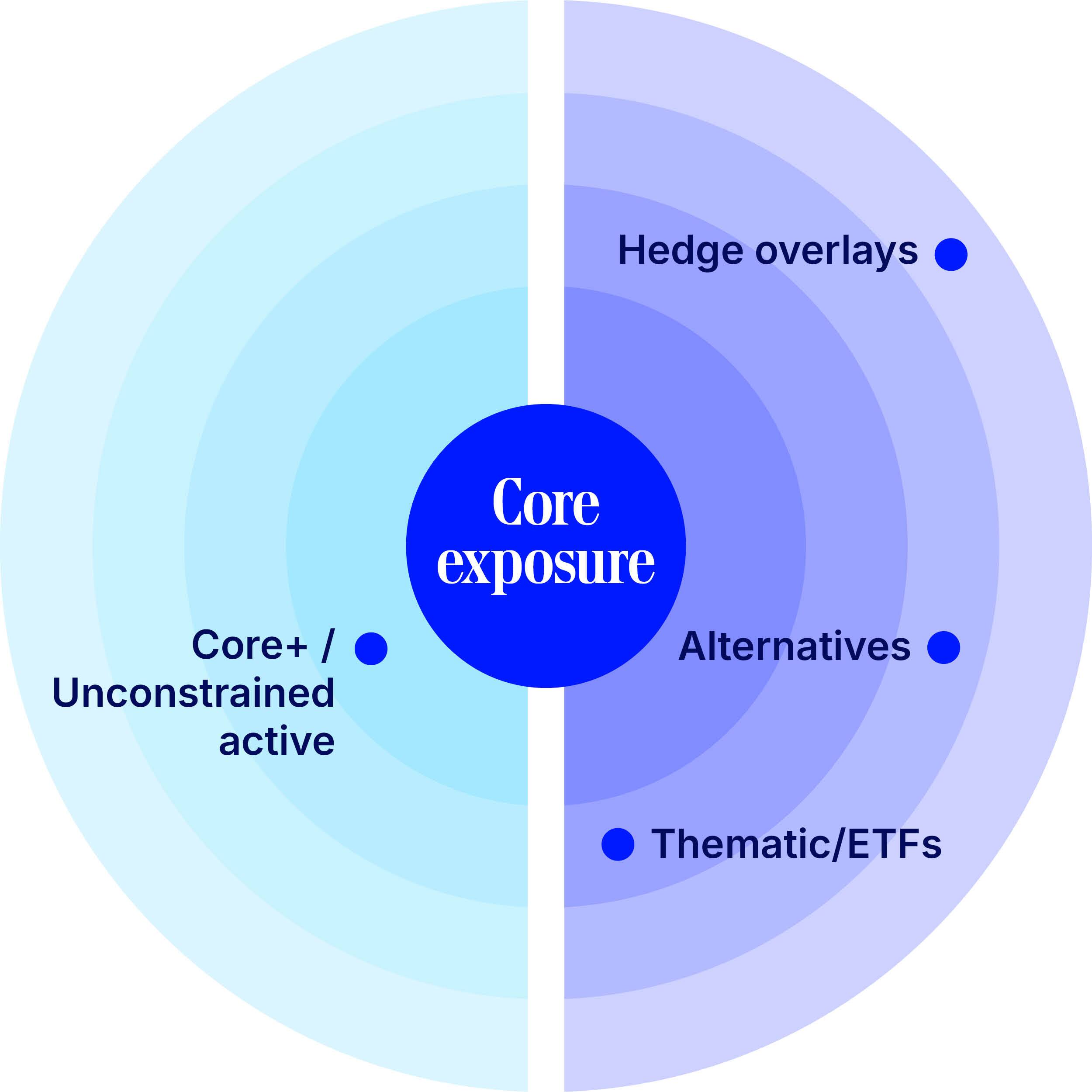
Complementing a benchmark-aligned core, targeted allocations to higher yielding, credit-sensitive, or alternative assets can help investors pursue alpha or enhance income.
Asset managers are developing portfolio construction frameworks and proprietary benchmarks to support more flexible strategies aimed at generating excess return.
From duration and sector positioning to targeted exposures, advances in trading technology are improving liquidity and reducing transaction costs—making precise, portfolio customization more efficient.
Customizable core-satellite framework
Explore State Street Strategies
Systematic Active Fixed Income
Emerging Market Debt
Leveraged Loan and High Yield Beta Exposure
Fixed Income Sustainable Investing
Indexed Fixed Income