
Gulf Capital: Resilience built over time
Oil above $100 a barrel has not shielded the Gulf's external savings, with the IMF now forecasting a 2026 GCC current-account surplus of just $34bn. Yet accumulated sovereign wealth and reserve buffers are helping to absorb external shocks in the region. We look at what this means for investors as the focus shifts from capital availability to capital allocation.
While the headlines over the previous nine months have centered on commodity price fluctuations, supply constraints, and global inflationary pressures, one of the more underappreciated consequences of the US-Iran conflict has been the impact on the Gulf’s external position. In October, the International Monetary Fund (IMF) cut its forecast for the Gulf Cooperation Council’s (GCC) combined current-account surplus from $106.5bn to just $34bn, implying that more than two-thirds of the region’s previously expected external savings will fail to materialize this year.1
Why is the Gulf’s external position so important? Since the region began exporting oil in the mid-twentieth century, current-account surpluses have served as a critical element of the Gulf’s exportable capital base. They reflect the excess of national savings over domestic investment, allowing governments to accumulate foreign assets through sovereign wealth funds (SWFs), portfolio investments, and cross-border financial flows. When these surpluses contract, the net flow of new capital available for accumulation and investment also diminishes. For a region that has become one of the world’s largest sources of international capital, the implications reach far beyond country-level balance of payments positions.
Yet weaker external savings do not imply an equivalent decline in the Gulf’s capacity to invest or withstand financial pressure. Decades of accumulated sovereign wealth, substantial reserve buffers, and continued access to international capital markets have created a degree of resilience that annual current-account balances alone cannot capture.
Elevated oil prices are no guarantee of surpluses
The latest current-account revisions serve as a timely reminder that higher oil prices do not automatically translate into stronger Gulf external balances. Realized export revenues depend on both prices and volumes. The ongoing disruption to shipping routes through the Strait of Hormuz, alongside renewed pressures in the Red Sea, has constrained export activity across much of the GCC since the onset of the conflict in late February, even as spot Brent crude prices crossed $100/bbl.
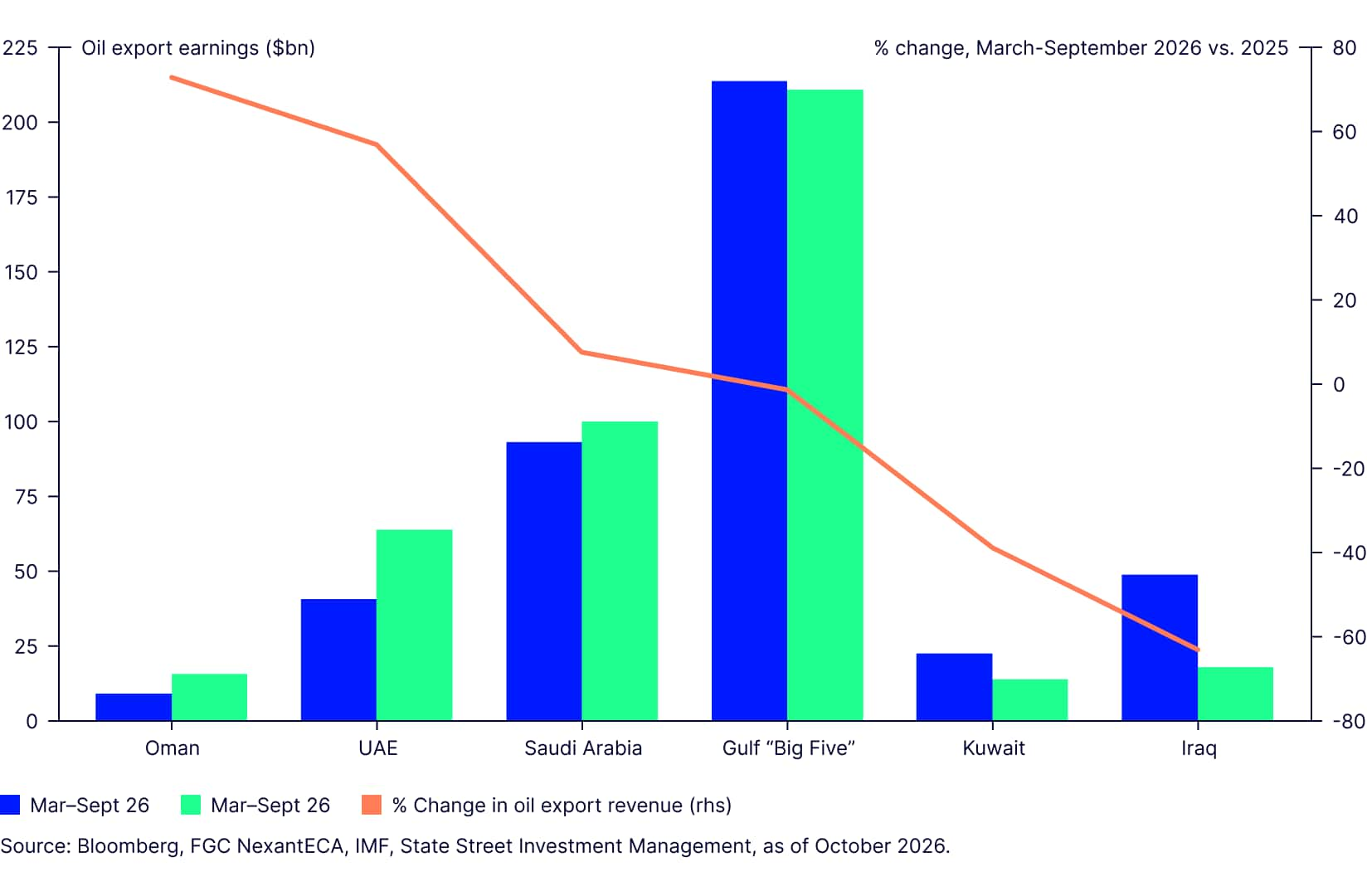
Between March and September 2026, the UAE and Oman were the only Gulf states to record material increases in oil export earnings, rising by 56.8% ($23.1bn) and 72.7% ($6.5bn), respectively, compared to the same period in 2025. For the UAE, the decision to leave OPEC on May 1, 2026, coupled with the ability to reroute crude flows via the Habshan-Fujairah pipeline and the use of ship-to-ship transfers, allowed it to recover exports quicker than GCC peers.
Oman recorded the largest increase in percentage terms, supported by its strategic position outside the Strait of Hormuz. This is particularly consequential for Oman, where hydrocarbons play a larger role in the economy than in the UAE, accounting for around 35% of GDP, 67% of government revenues, and 64% of total export revenues, compared with approximately 20%, 40% and 15%, respectively, in the UAE.2
For the largest Gulf oil exporter, Saudi Arabia’s revenues fell by $1.5bn (1.9%) in the six months to August relative to the year prior, before a recovery in September shipments lifted cumulative receipts into positive territory: $6.9bn or 7.4%. Elsewhere, export earnings have weakened substantially, with Kuwait’s sales falling by 39%, while Qatar’s hydrocarbon earnings fell 97% during the second quarter. Attacks on the Ras Laffan LNG complex damaged ~17% of the country’s production capacity, with QatarEnergy warning that repairs could take several years.
For the “big five” Gulf exporters—Saudi Arabia, UAE, Oman, Kuwait, and Iraq—cumulative receipts contracted by 1.4% ($2.95bn) over the seven-month period to September, despite the average crude price sitting close to $100/bbl during the same period.3 Compared with an average five-year price of ~$80/bbl, the aggregate decline in oil export revenues shows that elevated prices do not always offset volume deterioration if export capabilities are constrained.4 Alternative pipelines, ports, and shipping arrangements have allowed some producers to capture higher prices, while others have faced greater challenges owing to geographical positioning and limited export alternatives.
Figure 1: Gulf oil export earnings ($bn), March-September 2026 vs 2025
More recent data suggests a recovery in crude export momentum, with shipments estimated to have risen to ~80% of pre-war levels. This recovery has come at a cost for producers and consumers. Freight and insurance expenses remain materially above pre-war levels,5 while re-routing, protected convoys, and ship-to-ship transfers have added additional complexity and costs to regional export operations.
A growing divergence in Gulf external balances
The uneven impact of the conflict on oil export earnings is reflected in the latest current-account projections, which reveal considerable divergences across Gulf economies. While the IMF’s figures measure the revisions between the October 2025 and October 2026 forecasts, as opposed to realized outcomes, they do provide a useful indication of how expectations for the region’s external position have shifted since the conflict began.
Figure 2: GCC current account forecasts, October 2025 vs October 2026 ($bn)
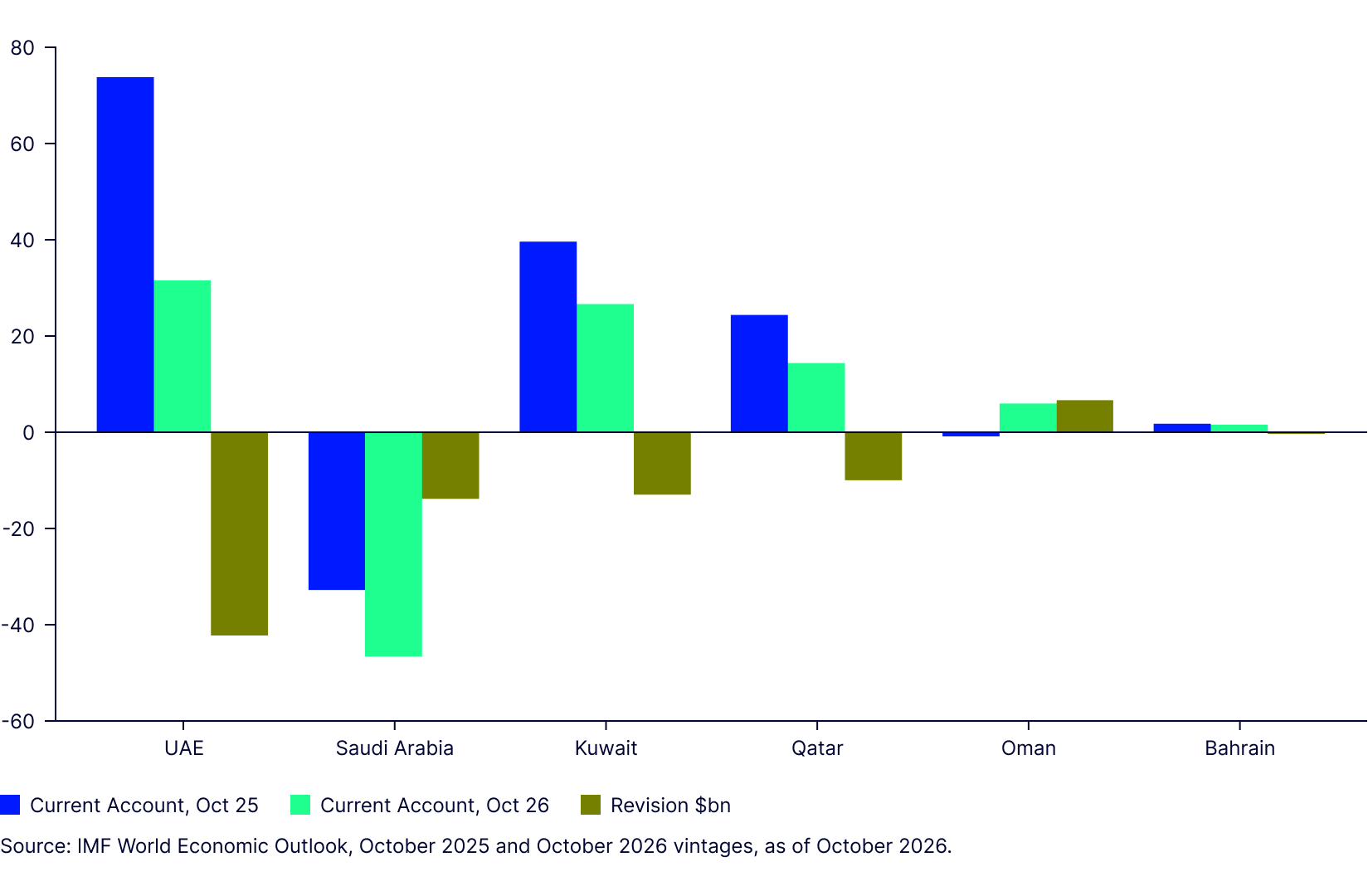
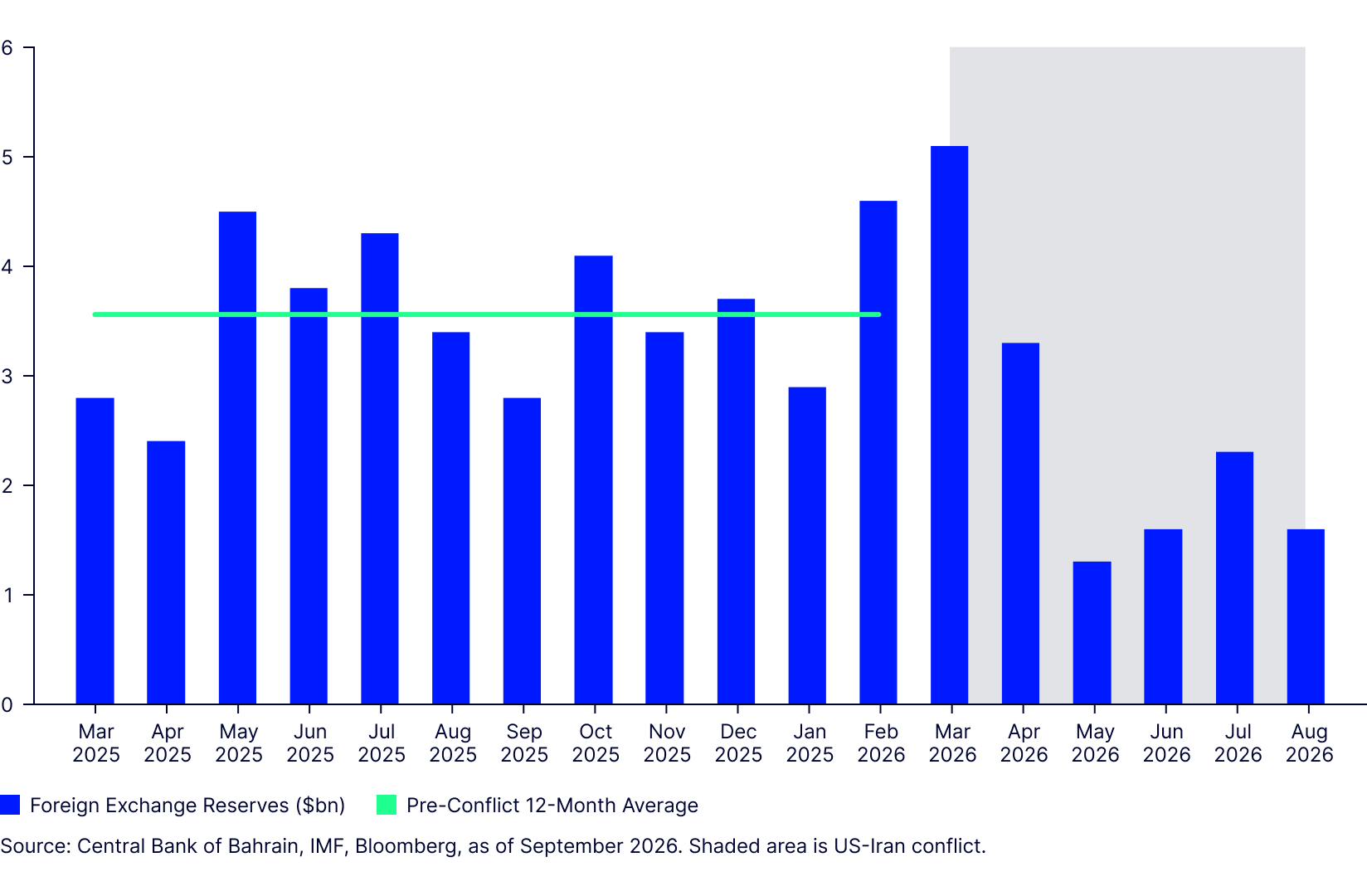
The UAE’s projected 2026 current-account surplus has been reduced by 57.1%, from $73.9bn to $31.7bn, or 4.8% of 2026 GDP. In Saudi Arabia, the region’s largest economy, the current-account deficit is expected to widen from $32.8bn to $46.6bn, to around 3.5% of GDP, while Kuwait and Qatar have seen respective surpluses reduced by ~$13bn and ~$10bn. Bahrain is forecast to retain a small current-account surplus of $1.66bn, albeit limited reserve buffers and a large debt burden leave it more exposed to prolonged disruption. Bahrain’s foreign reserves fell from $5.2bn in March to just $1.6bn in August, less than one month of import cover, while its government debt-to-GDP sits at over 160%, the fourth largest globally.6 Oman is the notable exception. With export facilities outside the Strait of Hormuz, the Sultanate has captured elevated oil prices while maintaining export volumes. From a realized current-account deficit of $1.2bn in 2025 (~1.1% of GDP), Oman is now forecast to post a modest current-account surplus of $6bn in 2026, equivalent to 5% of GDP.7
Figure 3: Bahrain foreign exchange reserves, March 2025 to August 2026 ($bn)
The UAE’s contribution to the GCC-wide adjustment is particularly notable. Despite higher oil export revenues since the onset of the conflict, hydrocarbon earnings are not the source of the deterioration. Instead, the revision appears to reflect developments across other components of the external accounts, including non-oil trade, transportation and logistics, tourism, investment income, and broader cross-border flows.
Recent economic data provides a window into the pressures on the UAE’s non-oil external sector. Non-oil GDP contracted by 1.1% y/y in the second quarter of 2026, a slowdown of 450 basis points relative to the five-year average growth rate. Accommodation and food services declined by 18.7% y/y (26.8% on a sequential quarterly basis), with transportation falling by 12.2% y/y.8 Together, these sectors subtracted an estimated 1.4 percentage points from real GDP growth and 1.8 percentage points from non-oil output. The UAE’s challenge is less a case of external vulnerability than a sizeable adjustment relative to previous expectations: it remains well capitalized with substantial reserves and access to international debt markets.
The influence of both the UAE and Saudi Arabia on the wider GCC external position is considerable. Collectively, the two largest economies in the region constitute more than three-quarters (77.4%) of the $72.5bn downgrade. Accounting for nearly 80% of GCC economic output, a decline in their collective external positions carries implications beyond national current accounts, particularly the generation and allocation of new savings.
The fiscal dimension of Gulf external balances
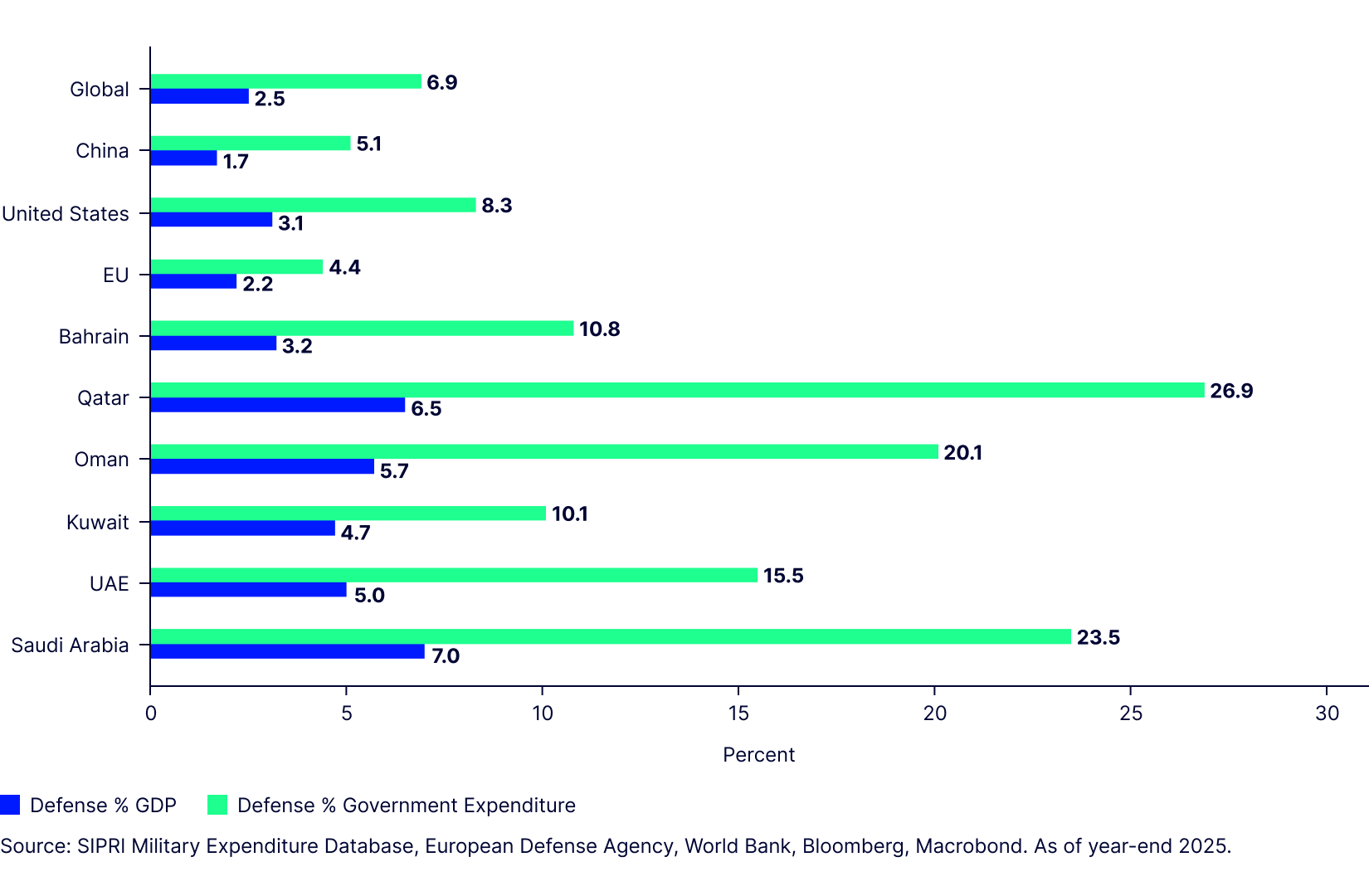
The Gulf’s external position becomes more significant when considered alongside recent fiscal developments. Across the GCC, governments are facing additional expenditure requirements. Defense and security commitments have increased, damaged infrastructure requires repair, while support measures have been introduced for those sectors most affected by disruption. State-owned energy companies are accelerating investment in export resilience. Saudi Arabia outlined plans in October to increase pipeline capacity over the coming three years. In the UAE, ADNOC has been directed to accelerate construction of a new West-East pipeline to double crude-export capacity through Fujairah. Oman is also expanding the role of Ras Markaz in Duqm as a crude-storage and export hub outside the Strait of Hormuz.9 Outside energy, even before the conflict, Gulf states spent more on defense relative to global peers, as both a proportion of total output and government expenditure.10
Figure 4: GCC defense spending % GDP and government expenditure, 2025
These expenditures will have different implications for growth. On the one hand, infrastructure, notably alternative hydrocarbon export capabilities, can reinforce productive capacity and reduce exposure to future disruption. On the other hand, reconstruction and higher security spending are primarily the costs of restoration and protecting existing activity. In both cases, the immediate requirement for financing places additional demand on public resources at the same time as national savings decline. For Gulf economies, sovereign capital accumulation is intrinsically linked to fiscal balances, national savings, and domestic investment. When external earnings weaken alongside rising domestic spending requirements, the scope for further sovereign asset accumulation can narrow, particularly where states seek to preserve existing fiscal buffers.
Historically, sovereign wealth accumulation was underpinned by twin fiscal and current-account surpluses. During the commodity boom of the 2000s, Saudi Arabia’s current-account surplus approached 30% of GDP, while Kuwait and Qatar regularly posted surpluses exceeding 20%. Sustained hydrocarbon revenues, combined with relatively restrained domestic expenditure, enabled Gulf governments to accumulate substantial foreign assets, laying the foundations for sovereign portfolios that have since become a major source of global capital.
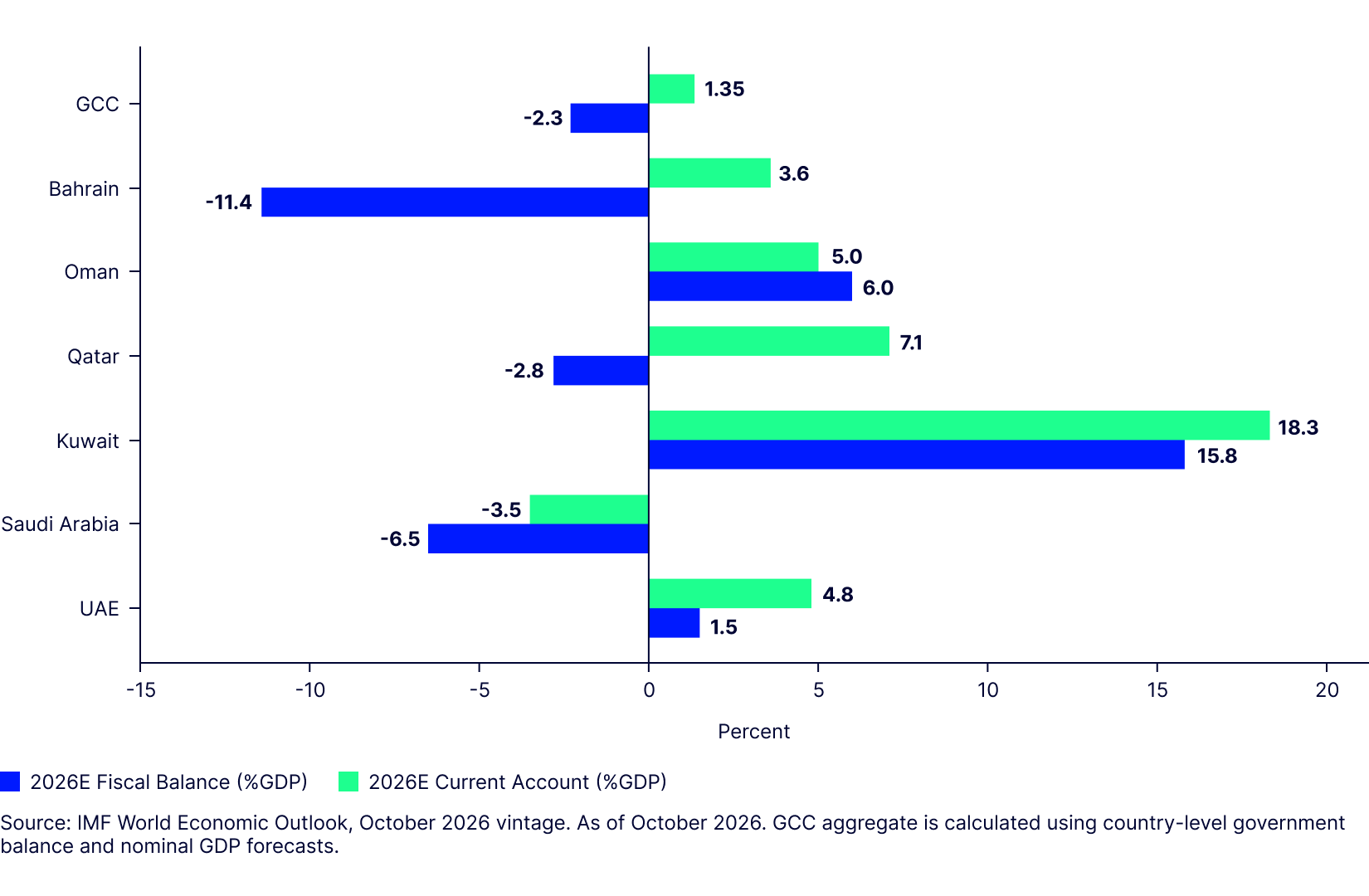
Today, the regional landscape is increasingly bifurcated. Kuwait should maintain large external and fiscal surpluses: 18% and 16% of GDP, respectively. Its external position benefits from substantial income generated through decades of accumulated foreign assets, with the Kuwait Investment Authority (KIA) managing approximately $1tn in assets. Last year, net income from overseas reached KD11.2bn ($36.5bn), equivalent to 23.2% of GDP.11 Kuwait demonstrates how accumulated sovereign wealth can become a source of resilience in its own right: investment income from overseas assets now makes a material contribution to the current account, partly offsetting weaker hydrocarbon receipts. Oman is also expected to record twin surpluses, while the UAE retains both fiscal and current-account surpluses, despite the sharp downgrade to its external position.
This contrasts with Saudi Arabia, which is projected to run twin fiscal and current-account deficits of 6.5% and 3.5% in 2026. The Saudi Ministry of Finance expects the fiscal deficit to widen to 4.9% of GDP, with expenditures the primary driver: on a year-on-year basis, expenditures are set to rise by 3.4%, or 9.3% higher than originally planned.12 These deficits do not imply an immediate financing constraint. Rather, they illustrate a growing competition for capital between domestic transformation, infrastructure requirements, and overseas investment. This may encourage greater selectivity in external deployment even as the Kingdom retains substantial borrowing capacity and a sizeable sovereign balance sheet.
Qatar and Bahrain are also expected to record fiscal deficits this year, although their respective financial positions differ markedly. Despite LNG shipments falling to near zero during the second quarter, Qatar continues to benefit from substantial foreign reserves and hydrocarbon wealth. Bahrain is the clearest regional outlier: limited reserve coverage, high public debt, and wider credit spreads leave it with less room to absorb a prolonged external shock without fiscal adjustment, additional borrowing or regional support.
The result is a region that remains a net exporter of capital at the aggregate level, with a 2026 current-account surplus equivalent to ~1.3% of GDP, but where external financing positions are becoming concentrated among a smaller number of Gulf states.
Figure 5: Current account and fiscal balance 2026 (% GDP)
Financial resilience built on deep capital pools and diversification
The conflict-induced changes in external and fiscal balances need to be considered alongside the substantial financial wealth accumulated across the Gulf in recent decades. The region’s sovereign wealth funds remain among the world’s largest pools of long-term capital, while official foreign exchange reserves provide an additional, sizeable layer of protection against external shocks.
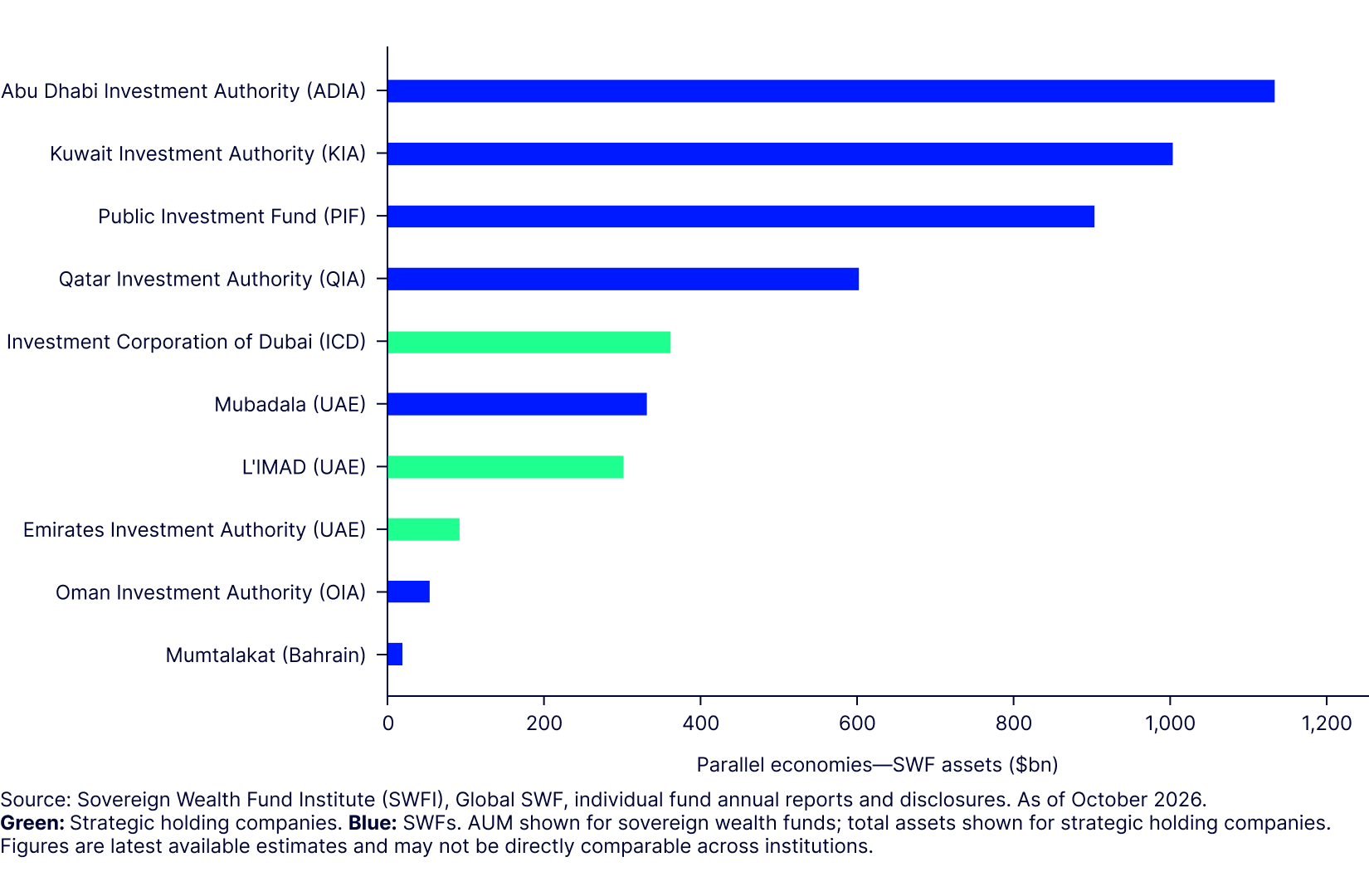
GCC SWFs oversee a combined $5.7tn in assets.13 This accumulated wealth provides a substantial buffer against weaker external earnings, although the scale and accessibility of these assets differ across Gulf states. The Abu Dhabi Investment Authority (ADIA) oversees assets in excess of $1.1tn, while Saudi Arabia’s Public Investment Fund (PIF) manages assets close to $900bn.14 To put these figures into context, of the 195 economies tracked by the IMF, just 21 are projected to produce more than $1tn in GDP this year. The scale of these assets provides an important, if often overlooked, distinction between Gulf states’ accumulated wealth and their ability to generate new savings.
Figure 6: GCC sovereign wealth fund assets $bn
Sovereign investment activity has remained robust throughout the conflict, with MENA SWFs deploying ~$102bn during the first nine months of the year, accounting for 39% of global sovereign dealmaking. The UAE’s Mubadala alone accounted for a quarter ($26.2bn) of investment, followed by PIF, ADIA, L’IMAD (UAE), and the Qatar Investment Authority.15 The decline in external savings has not translated into a material retrenchment in sovereign investment activity.
Recent economic indicators also suggest that some of the region’s non-oil economies have retained a significant degree of resilience despite ongoing disruption. Although UAE non-oil activity contracted year on year in the second quarter, growth recorded earlier in the year left first-half non-oil output 1.8% higher overall, while real GDP rose 0.4%. Sequential improvements in wholesale and trade, manufacturing, and real estate suggest that the initial shock may have begun to ease: wholesale and trade (2.3% q/q), manufacturing (1.1%), and real estate (6.9%). The ICT sector, underpinned by AI capacity expansion, drove a robust 7.1% q/q gain (8.7% y/y). Elsewhere, non-oil growth slowed in the second quarter, but remained in positive territory: Qatar 2.6%, Saudi Arabia 0.9%, and Oman 0.7%.16
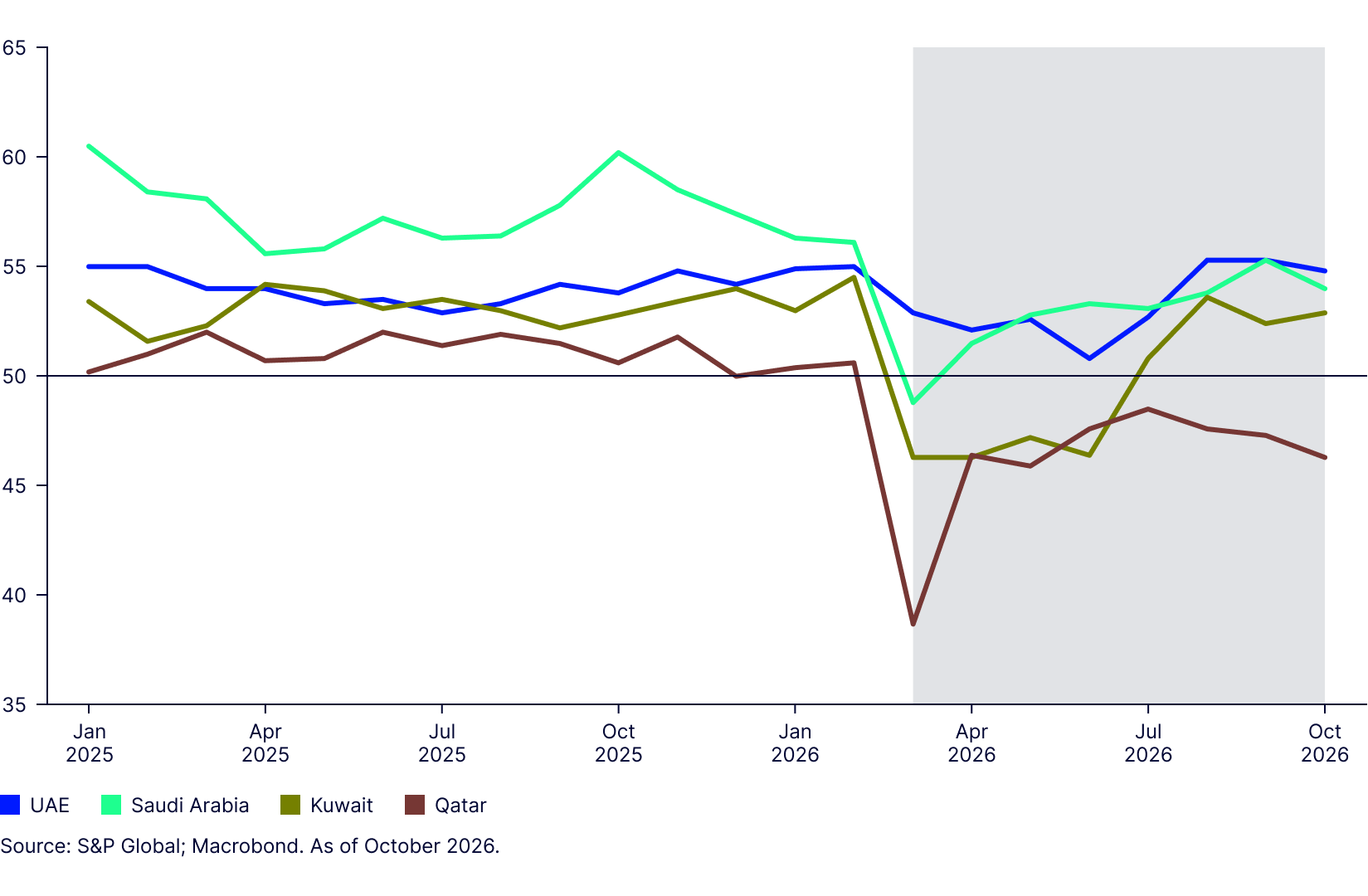
Business surveys point to further recovery. The UAE’s purchasing managers’ index (PMI) climbed to a seven-month high in September. Throughout the conflict, the UAE’s PMI never fell into contractionary territory. Saudi Arabia’s September PMI rose to 55.3, while Kuwait posted a modest expansion of 52.4. The improvement in business conditions is a welcome development, although recoveries remain uneven and contingent upon regional geopolitical dynamics. Qatar’s PMI continues to show the influence of LNG weakness (47.3).17
Figure 7: GCC Purchasing Managers’ Index
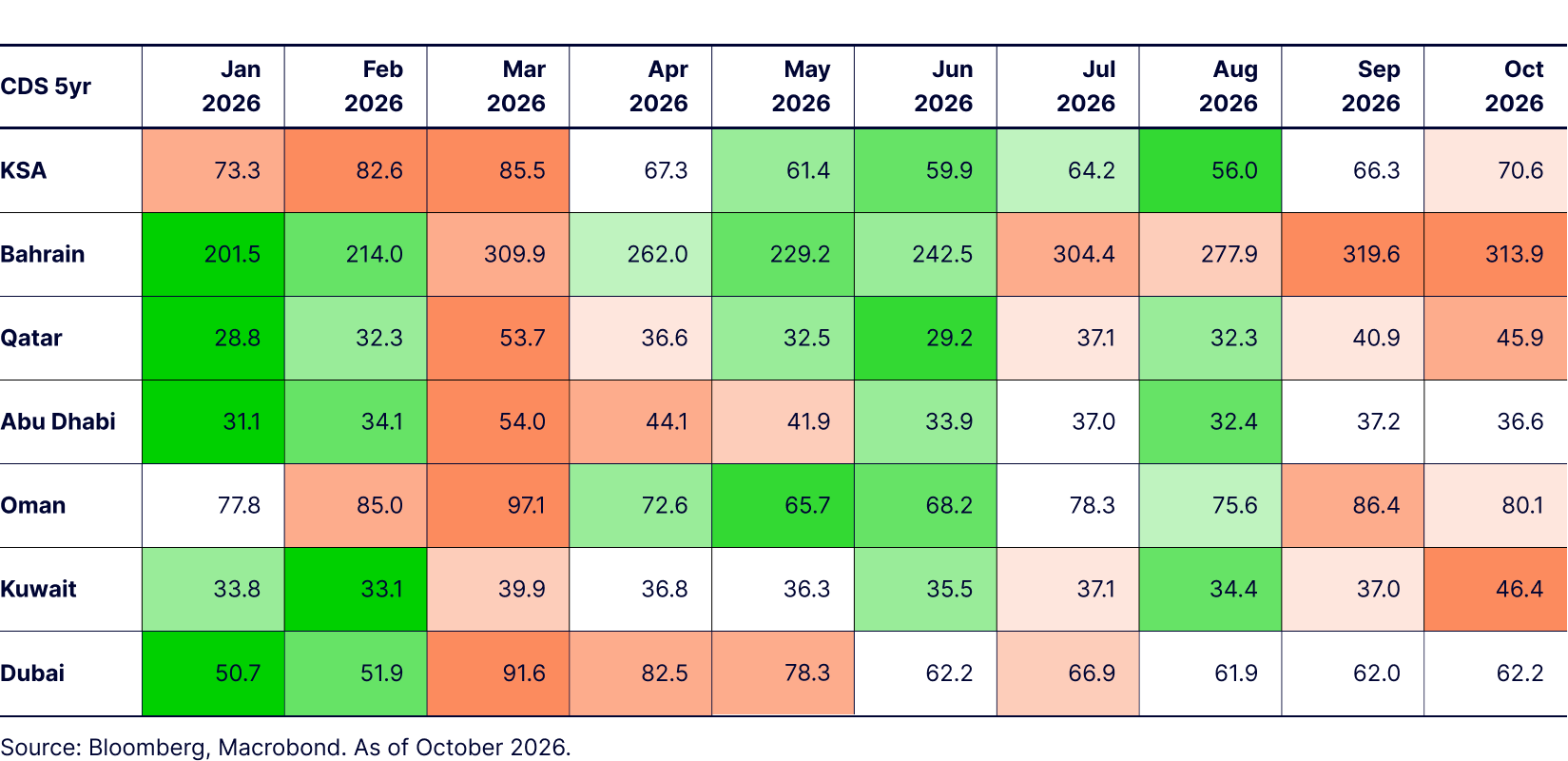
Financial markets also point to embedded regional resilience. GCC borrowers have retained access to international debt markets during the conflict, with sovereign bond and sukuk issuance increasing by 39.7% y/y in the third quarter of 2026. Sovereign spreads across local currency and USD yield curves have remained relatively tight (see GCC bond markets: Finding value in a changing fixed income landscape). Aside from Bahrain, government debt to GDP levels remain healthy relative to developed-market peers, with no downgrades to sovereign credit ratings since the conflict began. Five-year credit default swaps widened sharply at the onset of the conflict. Performance has since diverged, with stronger GCC credits narrowing toward pre-conflict levels, while Bahrain remains more than 100bps wider. Market indicators reinforce the theme that Gulf states cannot be viewed as a homogeneous group. Stronger sovereign borrowers continue to benefit from ample financial buffers and access to debt markets, while smaller and more leveraged issuers (notably Bahrain) face a less accommodating environment.
Figure 8: GCC five-year credit default swaps, January-October 2026
Outlook and implications for Gulf capital
The Gulf’s vast accumulated financial wealth provides considerable capacity to absorb a temporary decline in external balances. For the region’s more diversified economies, sizeable foreign-exchange reserves, sovereign investment portfolios larger than the GDP of many countries, and continued access to capital markets provide the flexibility to meet immediate financing requirements without materially compromising longer-term investment and economic objectives. This flexibility, however, does not come without costs, particularly in the short term where additional borrowing or asset drawdowns reduce the resources available for future investment. The scope to absorb pressures varies across the Gulf, reflecting divergences in sovereign balance sheets, fiscal positions, and domestic investment commitments.
The duration of the Iran conflict remains the principal determinant of the outlook. The recovery in hydrocarbon exports from September, coupled with resilient non-oil activity, suggests that some of the initial disruption has begun to unwind, although the sustainability of the recovery is contingent on avoiding further regional escalation. Renewed Houthi attacks on both civilian and energy infrastructure in Saudi Arabia in October show just how quickly the regional landscape can change. Renewed and prolonged interruptions to hydrocarbon shipments, trade, tourism, and transportation could weigh on external savings and increase demands on public finances in the new year. Conversely, a sustained normalization of regional activity would underpin a recovery in external balances and reduce shorter-term pressures on domestic financing requirements.
This is important given the scale of the investment programs underway in the Gulf. Saudi Arabia continues to direct substantial resources towards Vision 2030, while the UAE remains focused on logistics, technology, advanced manufacturing, and AI. The conflict has reinforced the strategic importance of energy security, alternative export routes, and supply-chain resilience, raising the need for additional capital investment in critical infrastructure.
For Gulf sovereign investors, the central issue is shifting from capital availability to capital allocation. Greater domestic financing needs may encourage more selective overseas deployment, increased use of borrowing, and deeper partnerships with international capital. The Gulf will remain a major source of global investment, underpinned by vast wealth and reserves, but the composition, timing, and strategic purpose of that investment may evolve. Provided the recovery in hydrocarbon exports and non-oil activity continues into next year, the Gulf remains well positioned to absorb the adjustment without a fundamental change to its role in global capital markets. The wealth and reserves accumulated during the region’s good times serve as the financial buffers to help weather the present external shock.