State Street ETF Trading Hub
Bienvenue sur le centre d’expertise de négociation des ETF de State Street. Explorez des sujets tels que le fonctionnement de la négociation des ETF, les rôles et responsabilités de chacun des participants, l’arbre décisionnel de négociation, les méthodes d’évaluation de la liquidité et plus encore.
Besoin d’aide pour optimiser l’exécution de transactions ? Bénéficiez de l’expertise de notre équipe Marchés de capitaux
State Street Investment Management dispose d’une équipe dédiée aux marchés de capitaux des ETF, capable de fournir un accompagnement indépendant sur les sources de liquidité, les contreparties de négociation et les plateformes d’exécution, lorsque l’expertise spécifique est essentielle à une exécution efficace des transactions pour les investisseurs.
L’équipe peut également fournir des analyses détaillées permettant aux investisseurs de prendre des décisions éclairées lors de l’évaluation ou de l’exécution de transactions sur nos ETF.
Pour prendre des décisions éclairées, n’hésitez pas à adresser un e-mail à l’équipe ou à solliciter une analyse de prénégociation.
Négociation d’ETF
Arbre décisionnel d’exécution
Lors de l’exécution d’une transaction sur ETF, de nombreuses décisions doivent être prises afin de garantir la meilleure exécution. Le tableau présente un résumé des stratégies d’exécution.
Acheter et vendre un ETF : obtenir la meilleure exécution
Stratégie d’exécution | Description | Urgence élevée | Sensibilité à l’impact de marché | Risque temporel | Anonymat |
|---|---|---|---|---|---|
Arbitrage de risque | Le client reçoit le cours pour l’ensemble de la transaction en une seule fois, et le fournisseur de liquidité assume le risque de gérer la position résultante. Les fournisseurs de liquidité peuvent être mis en concurrence pour la transaction, ce qui permet une mesure claire de la meilleure exécution. | ✔ | |||
Négociation en fonction de la valeur liquidative | Négociation exécutée en achetant ou en vendant le panier sous-jacent de valeurs mobilières et en créant/rachetant ultérieurement des parts d’ETF. Le client reçoit généralement un cours reflétant les exécutions pour le panier sous-jacent de valeurs mobilières plus ou moins les coûts de création/rachat. Le client compare généralement les indices de référence avec la valeur liquidative en fin de journée. | ✔ | ✔ | ||
Agence | Types d’ordres électroniques utilisant des instructions de négociation préprogrammées automatisées. Les ordres peuvent être mesurés par rapport à des indicateurs d’exécution basés sur le volume, le temps ou d’autres facteurs. | ✔ | ✔ | ✔ |
Liquidité des ETF
La liquidité est l’une des caractéristiques les plus importantes des ETF, qui attire un groupe diversifié d’acteurs du marché vers ce véhicule. L’analyse des ETF nécessite un processus de diligence raisonnable qui examine quatre aspects fondamentaux : le cours, la méthodologie de l’indice ou de la stratégie, la performance et la liquidité.
Les trois premiers éléments sont principalement intuitifs. En revanche, lorsqu’il s’agit d’analyser la liquidité, l’examen peut se révéler plus opaque et complexe, en raison de l’infrastructure de négociation fragmentée des ETF OPCVM. Les ETF OPCVM sont actuellement négociés sur un large éventail de plateformes, aussi bien sur les marchés sur carnet d’ordres que hors carnet d’ordres. Il est donc important pour un investisseur d’examiner l’ensemble du spectre de liquidité d’un ETF lors de l’évaluation de la liquidité potentiellement accessible. Il convient également de souligner que le volume quotidien moyen ne mesure pas la liquidité réelle disponible dans un ETF. Il s’agit simplement d’une mesure de la demande historique affichée, et non de l’offre. La véritable liquidité d’un ETF réside en fin de compte dans ses titres sous-jacents.
Comprendre le spectre de liquidité des ETF
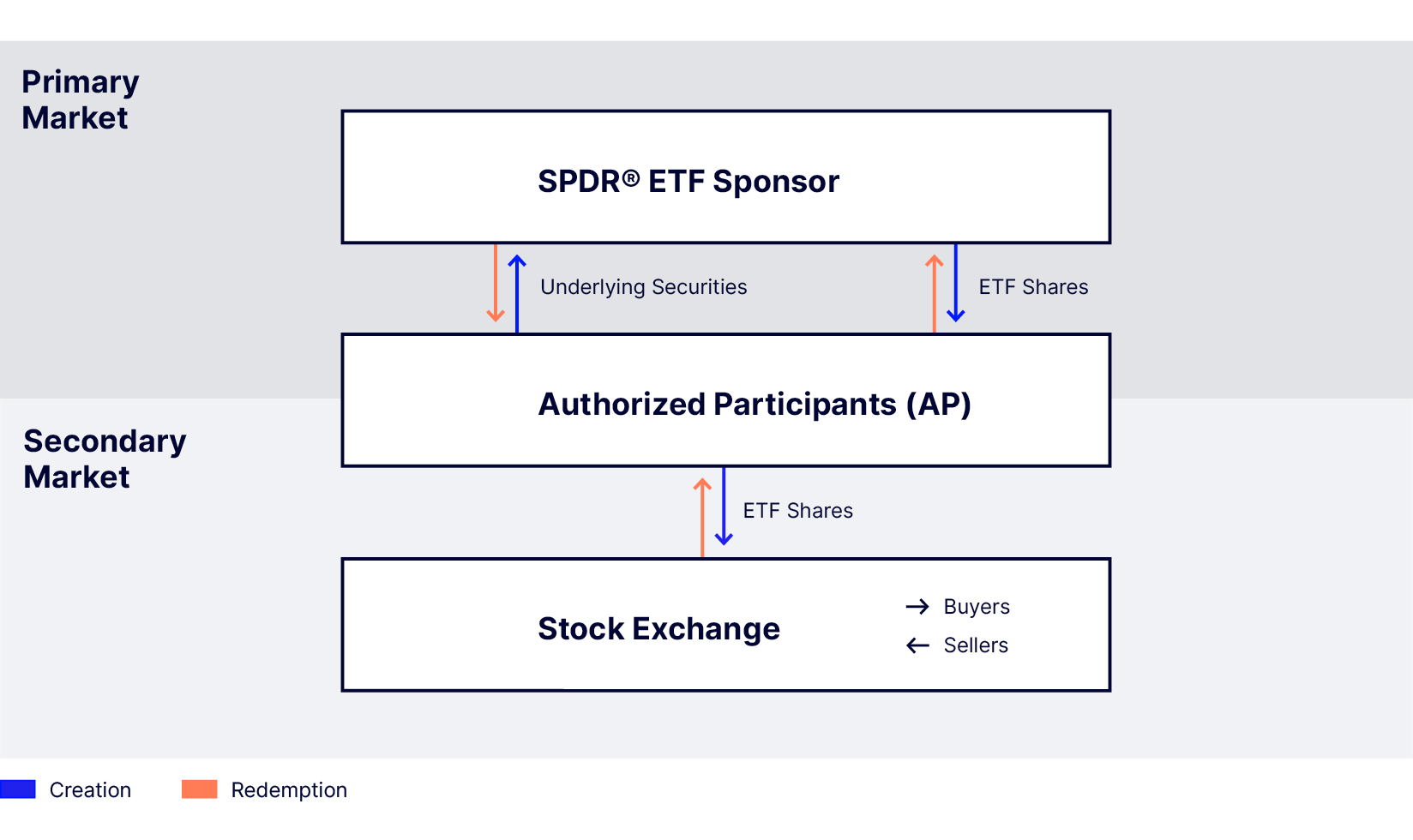
Pour comprendre d’où vient la liquidité des ETF, il est essentiel d’analyser les mécanismes de négociation des ETF et les fonctions des acteurs clés de l’écosystème de liquidité.