
Tin hats and tunnel vision: Equities and higher yields
With sovereign bond yields lurching higher, investors have understandably questioned whether higher yields pose a threat to equity markets. History suggests the answer is nuanced: equities can continue to advance through periods of rising yields, provided earnings remain supportive.
Equities can withstand higher yields
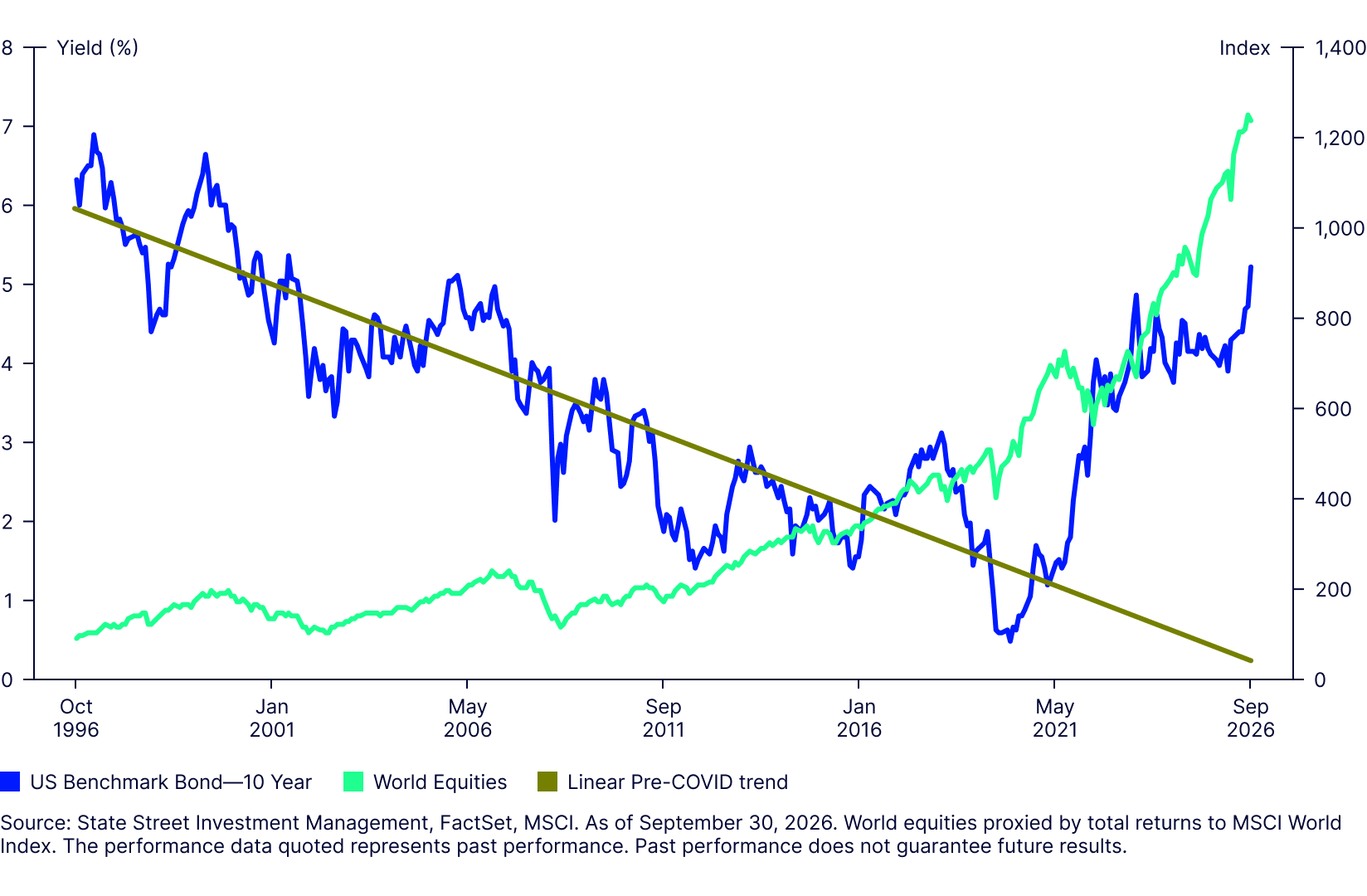
The bond market sell-off was a defining feature of the third quarter, as the US 10-year Treasury yield rose from 4.5% at the end of June to around 5.3% at the end of September. Although elevated, this is not unprecedented: yields approached this point as recently as 2023 and regularly exceeded it before the Global Financial Crisis of 2008-2009.
For much of the period from the late 1990s until the COVID pandemic hit in 2020, equities benefited from rising corporate profits and a secular decline in bond yields. That environment has since changed. Inflation, tighter monetary policy, and, more recently, higher term premia have driven bond yields structurally higher. Yet equities have maintained their advance, supported by strong earnings and investment associated with artificial intelligence.
Figure 1: Bond yields and equity returns
Earnings remain the key driver
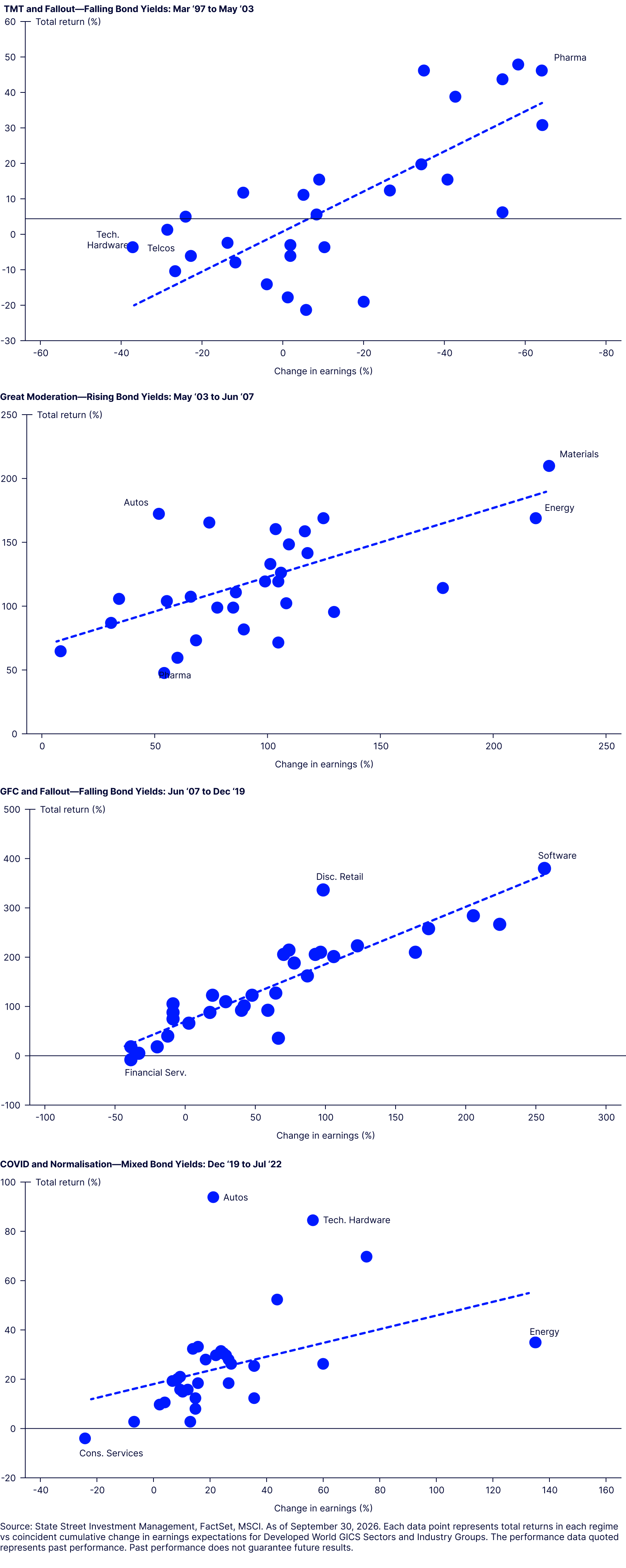
This backdrop may appear challenging to reconcile. Investors not only face higher interest rates but also renewed inflation pressures, heightened geopolitical tensions, and concentrated equity market leadership. Yet analysis of the past 30 years shows that, in periods of both rising and falling bond yields, sector and industry-group returns have been closely linked to changes in earnings expectations (see Figure 2).
Figure 2: Returns associated with earnings revisions across yield regimes
Strong fundamentals bolster expectations
That relationship has remained visible since 2022, although Figure 3 highlights considerable dispersion. The semiconductors and semiconductor equipment group is a clear outlier relative to the market, reflecting exceptional increases in both earnings expectations and share prices. Even beyond this group, earnings have continued to be remarkably resilient.
Figure 3: Recent earnings and returns are stretched at the extremes
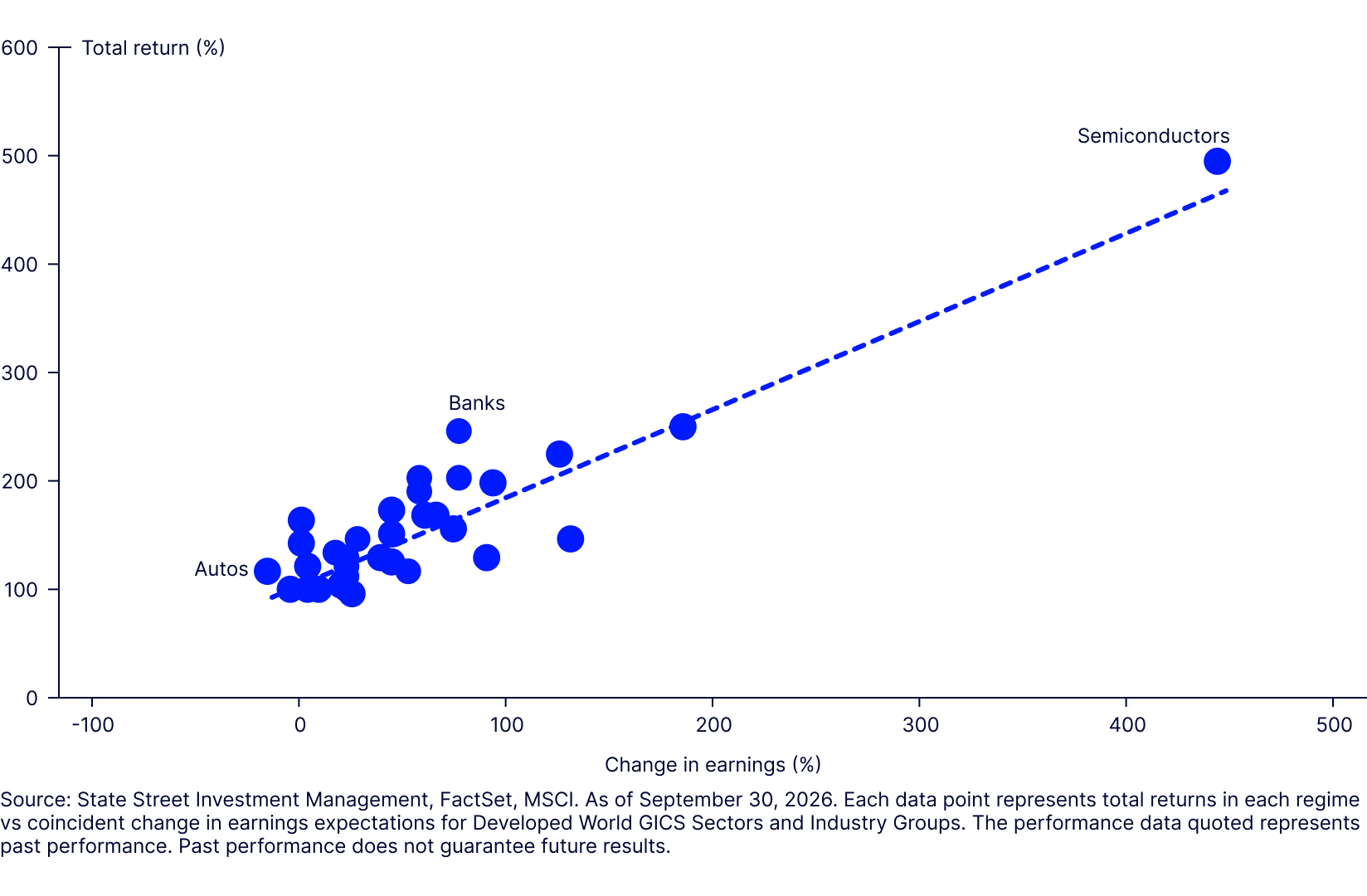
The strength of the earnings picture is clear. World earnings expectation grew by 29.5% year-over-year in September, with estimates rising 8% during the third quarter. All 11 sectors within the MSCI world Index recorded year-over-year growth in earnings expectations.
So perhaps the immediate risk is not that recent equity returns are disconnected from fundamentals. It is that today's exceptionally strong fundamentals are being extrapolated too far into tomorrow.
Margin for error narrows
This distinction matters because the margin for error has narrowed. Higher bond yields have increased the return available to investors outside equities. At the same time, the market remains unusually dependent on the AI investment cycle. Rapid investment in data centres, semiconductors, and related infrastructure has supported both economic activity and corporate earnings, but any slowdown in AI investment or profitability could challenge current expectations.
This is where tunnel vision can be mistaken for a laser focus on earnings expectations. Strong earnings can continue to support equities even with higher bond yields. But investors now face two distinct risks: earnings expectations may disappoint, or valuations may compress as higher discount rates intensify competition for capital. The light at the end of the tunnel may be the considerable long-term potential of AI. The journey between today's investment boom and tomorrow's returns, however, is unlikely to be straightforward.
That argues not for abandoning equities, but for greater diversification, valuation discipline, and attention to balance-sheet quality. Earnings remain supportive, but concentrated expectations and a thinner valuation cushion leave more room for disappointment.
The tin hat may not yet be necessary, but it should be kept close at hand. Defensive equity allocations, diversification, and disciplined risk control may once again prove valuable.
To learn more about the views and investment capabilities of the Systematic Equity – Active team, please visit our website.